Why RAM Prices Exploded in 2026 and When They May Fall
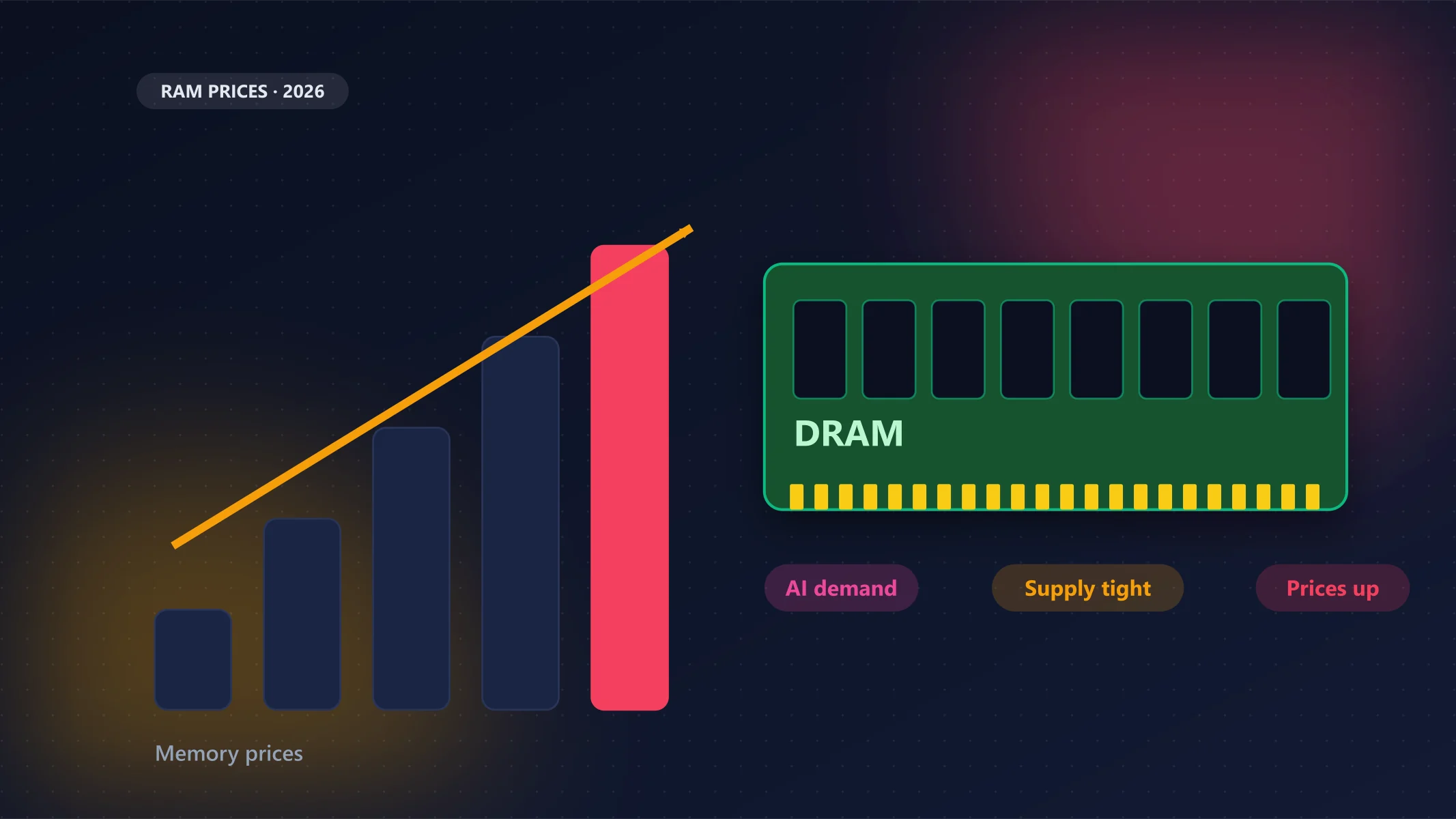
RAM and SSD prices have surged in 2026 because AI data centres are absorbing the memory supply. What happened, which products got dearer, and what Micron, Samsung and Gartner say about when it ends.

On this page
If you have tried to buy RAM, an SSD, a laptop or a games console in 2026, you will have noticed the prices. This is not a normal price swing. Memory prices have risen so far and so fast that analysts have cut their forecasts for how many PCs and phones the world will buy.
This article explains what happened, why, which products got more expensive and when it might end, using company statements, analyst reports and news coverage read on 7 November 2026. Where I could only see a figure second-hand, I say so.
The short version
Why: AI data centres are taking a huge share of the world's memory, so less is left for phones, PCs and consoles. How bad: analysts forecast memory prices for PCs and phones to be up about 130% by the end of 2026, adding roughly 17% to PC prices and 13% to phone prices. How long: Micron's CEO says he sees demand exceeding supply through 2027 and 2028. The Iran war adds costs but did not start this: the surge was forecast two days before the war began.
What happened to memory prices
Memory chips (DRAM for RAM, NAND for SSDs) are sold in different ways, so the numbers differ:
- Contract prices are what big manufacturers such as Dell, Apple or Samsung pay under agreements.
- Spot prices are the open-market price for loose chips.
- Retail prices are what you pay in a shop.
The reports I could read say:
- Q1 2026: TrendForce forecast on 26 February that conventional DRAM contract prices would rise 90 to 95 percent from the previous quarter. Samsung reportedly confirmed first-quarter increases above 100 percent (ET News, via TrendForce, 5 March).
- Q2 2026: reports differ. Taiwanese press cited by TrendForce expected increases of up to 40 percent. A Tom's Hardware headline says TrendForce predicted DRAM would jump 63 percent that quarter, but I could not open the article, so I cannot confirm the detail.
- Older DDR4 too: the DDR4 8Gb chip's contract price reached $9.30 in December 2025 from $1.35 in March 2025 (DRAMeXchange, via Korea JoongAng Daily, 20 January 2026). So buying older memory is not an escape.
- Retail: I could not find a current retail price from a source I trust. Price-tracker sites quote very different figures for a 32GB DDR5 kit, so I do not repeat them. Check PCPartPicker's price history for the kit you want.
What the analysts forecast for devices
Gartner's 26 February forecast, as reported by several outlets (Gartner's own page blocked automated access when I checked), says:
- PC shipments will fall 10.4 percent and smartphone shipments 8.4 percent in 2026.
- Combined DRAM and SSD prices will be up about 130 percent by the end of 2026.
- That would push average PC prices up about 17 percent and smartphone prices up about 13 percent compared with 2025.
Gartner is a forecaster, so these are projections, not measured retail changes.
Why is this happening?
The short answer is AI. Memory makers are giving priority to AI and server customers, which leaves less for consumer devices, and a fast-growing product is high-bandwidth memory (HBM) for AI accelerators.
The evidence I could verify:
- A Samsung executive said HBM will take almost 30 percent of industry DRAM wafer capacity in 2027, up from 20 percent this year (Reuters, via The Next Web, 29 September).
- Micron reported record results for its fiscal fourth quarter (ended 3 September): revenue of $54.23 billion. It guided the next quarter to $61.5 billion, plus or minus $1.5 billion (Micron press release, 30 September).
- Micron's CEO said he sees demand exceeding supply in 2027 and 2028 and has no "line of sight to when supply and demand will return to balance" (earnings call, as reported by The Next Web and 24/7 Wall St).
- Roughly three-quarters of Micron's 2027 output is already committed to customers, according to those two outlets (one says "about", the other "over" 75 percent).
No source I read splits the price rise into exact shares (AI versus everything else), so be wary of anyone who gives one.
Is the Iran war to blame?
Not for the memory price surge. TrendForce's first-quarter forecast and Gartner's warning are both dated 26 February. The war began on 28 February. The memory squeeze was already under way, and DDR4 had risen sharply through 2025.
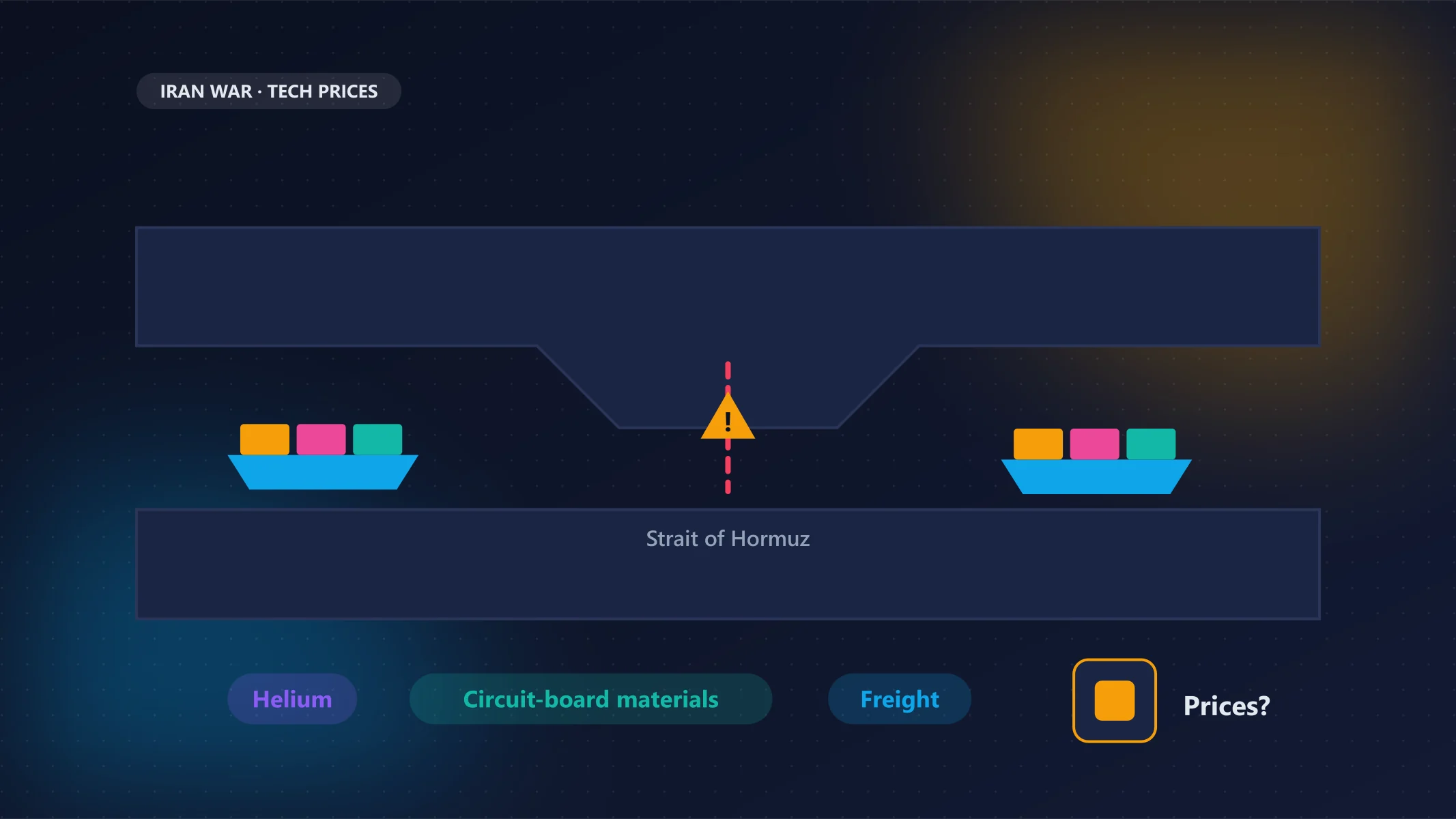
The war has added costs of its own, through helium for chip plants, circuit-board materials and freight. We cover that in Will the Iran War Raise Tech Prices?.
Which products got more expensive?
These are the price changes I could confirm from at least one report. Company announcements were not always readable, so I note where I rely on news coverage.
| Product | Change | When | Reason given |
|---|---|---|---|
| PlayStation 5 (disc) | Reported at $649.99 (about +$100) | 2 April | Sony cited global economic pressures |
| Xbox Series X | $649.99 to $799.99 | 1 August | Microsoft: memory and storage prices up more than 2.5 times |
| Xbox Series S | $399.99 to $499.99 | 1 August | Same |
| Switch 2 (US) | $449.99 to $499.99 | 1 September | Nintendo cited "changes in market conditions" |
| Steam Deck OLED 512GB | $549 to $789 (single secondary source) | 27 May | Valve: component costs, mainly memory (as paraphrased by the site) |
| Mac, iPad, Apple TV | Raised, no figures (reported for India) | 2026 | Apple CEO: memory costs |
| Samsung Galaxy Book6 Pro | Launched at 3.41 million won (14-inch) vs 1.77 to 2.81 million won for the Book5 Pro range | January | Memory costs (Korea JoongAng Daily) |
Notes on the table:
- Xbox: the figures and the "2.5 times" statement come from an Xbox Wire post as quoted by The Shortcut (26 June). I could not open the post itself. Microsoft also said it expects memory and storage costs to double again by autumn 2027.
- PS5: the $649.99 figure comes from news reports. I could not open Sony's own post, so check the PlayStation website for exact prices by model and country.
- Switch 2: Game Developer (8 May) reports the US, Canada and Europe increases from 1 September, with Japan earlier on 25 May.
- Apple: Apple's CEO said on the July earnings call that Apple "reluctantly raised prices" and called it a "100-year flood on memory pricing" (Business Today and ARY News, 31 July). Neither report gives figures, and Apple has not announced new iPhone prices.
When will RAM prices come down?
Nobody can promise a date, but the people closest to the market are not expecting quick relief:
- Micron: tight through fiscal 2027 and 2028 (see above).
- Nanya Technology's president: prices stay high in a "T-shaped" pattern, with tightness potentially easing in the second half of 2028 (Economic Daily News, via TrendForce, 5 March).
- Gartner: expects people to keep devices longer, because replacing them costs more.
TrendForce said in March that new memory capacity stays constrained through 2026 and the first half of 2027. A faster fix would probably need AI demand to cool, which is my reading of the evidence, not a forecast anyone has published.
What should you do if you need to buy?
These are my suggestions, not professional advice:
- Buy what you need now, not "to be safe". If prices keep rising, waiting costs more. If they plateau, paying a premium for extra capacity you will not use is wasted money.
- Check the RAM and storage in the exact model. Some makers trim memory instead of raising the price (Held Games reported one handheld maker doing this).
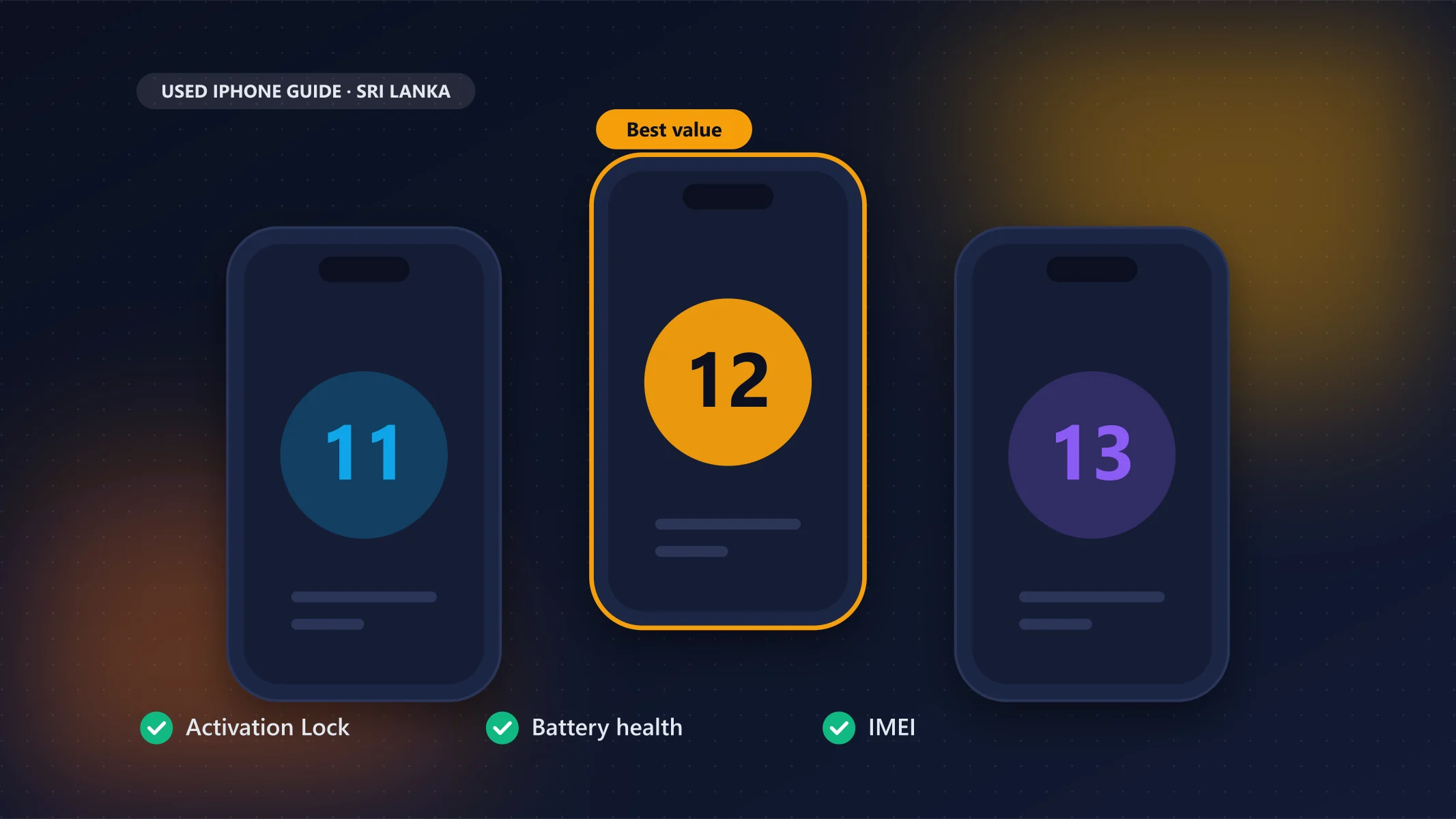
- Consider used or refurbished. A used phone avoids new-memory prices, but only if you check it properly. See our guide to second-hand iPhones in Sri Lanka.
- Compare sellers and ask for the price in writing, especially if you are buying in Sri Lanka, where I could not find published RAM or laptop price data.
- Do not rely on one retail price. Check a price history before you buy.
FAQ
Why is RAM so expensive in 2026?
Because AI data centres are absorbing a large share of the world's memory production, and memory makers are prioritising AI customers. Micron says demand exceeds supply and sees that continuing through 2027 and 2028.
When will RAM prices go down?
Nobody knows. Micron does not see supply and demand balancing in 2027 or 2028, and a Nanya executive said tightness could potentially ease in the second half of 2028.
Is DDR4 cheaper than DDR5?
Not safely. The DDR4 8Gb chip's contract price rose from $1.35 in March 2025 to $9.30 in December 2025, so older memory has also become much dearer.
Will phones and laptops get more expensive?
Gartner forecast average PC prices up about 17 percent and phone prices up about 13 percent in 2026 compared with 2025. Several console makers and Apple have already raised prices.
Is the Iran war causing the RAM shortage?
No. The shortage was forecast before the war began. The war adds other costs, which we explain in our article on tech prices and the Iran war.
What I could not verify
- I could not open Gartner's own press release, Tom's Hardware's price articles, or Sony's and Nintendo's price announcements, so I rely on news reports for those figures.
- I did not find a current retail price for DDR5 kits from a source I trust.
- I did not find published RAM or laptop price data for Sri Lanka.
- I did not test any hardware for this article.
Sources
- Micron fiscal Q4 2026 results (Micron, 30 September 2026)
- Micron sees the memory shortage tightening into 2028 (The Next Web, 2 October 2026)
- Micron blew past estimates (24/7 Wall St, 1 October 2026)
- Nanya Tech: DRAM prices rise month by month (TrendForce, 5 March 2026)
- Gartner Says Surging Memory Costs Will Reduce Global PC and Smartphone Shipments in 2026 (Gartner, 26 February 2026) and The Register's coverage
- Sticker shock: laptop prices soar as AI and memory demand drive up costs (Korea JoongAng Daily, 20 January 2026)
- Xbox Series X price increase (The Shortcut, 26 June 2026)
- Nintendo is raising Switch 2 prices around the world (Game Developer, 8 May 2026)
- The PlayStation Portal, PS5 and PS5 Pro are getting huge price hikes (TechRadar, headline only; I could not read the body)
- 2026 gaming price hikes (Held Games, source for the Steam Deck prices)
- Tim Cook explains why Apple raised prices (Business Today, 31 July 2026) and ARY News
Related reading
How this was researched
This article is based on official documentation, pricing pages and the other sources listed in the article. It does not include my own hands-on testing. I update articles when pricing or features change. Read my review process.

About the author
Sameera Jayakodi
Software engineer and founder of TechToolHub
I'm Sameera Jayakodi, a software engineer based in Sri Lanka. I use AI, developer and productivity tools in my own work every day, and I started TechToolHub to give clear, honest comparisons without the hype. Every article is researched from official sources, and the ones marked "Hands-on tested" include my own testing.
Related articles
Will the Iran War Raise Tech Prices? What We Know (Nov 2026)
The war adds real costs (helium, circuit-board materials, freight, energy), but the sharp device price rises of 2026 are mainly about memory, and I found no source that puts a number on the war share.
World War 3 and Technology: What the Iran War Shows So Far
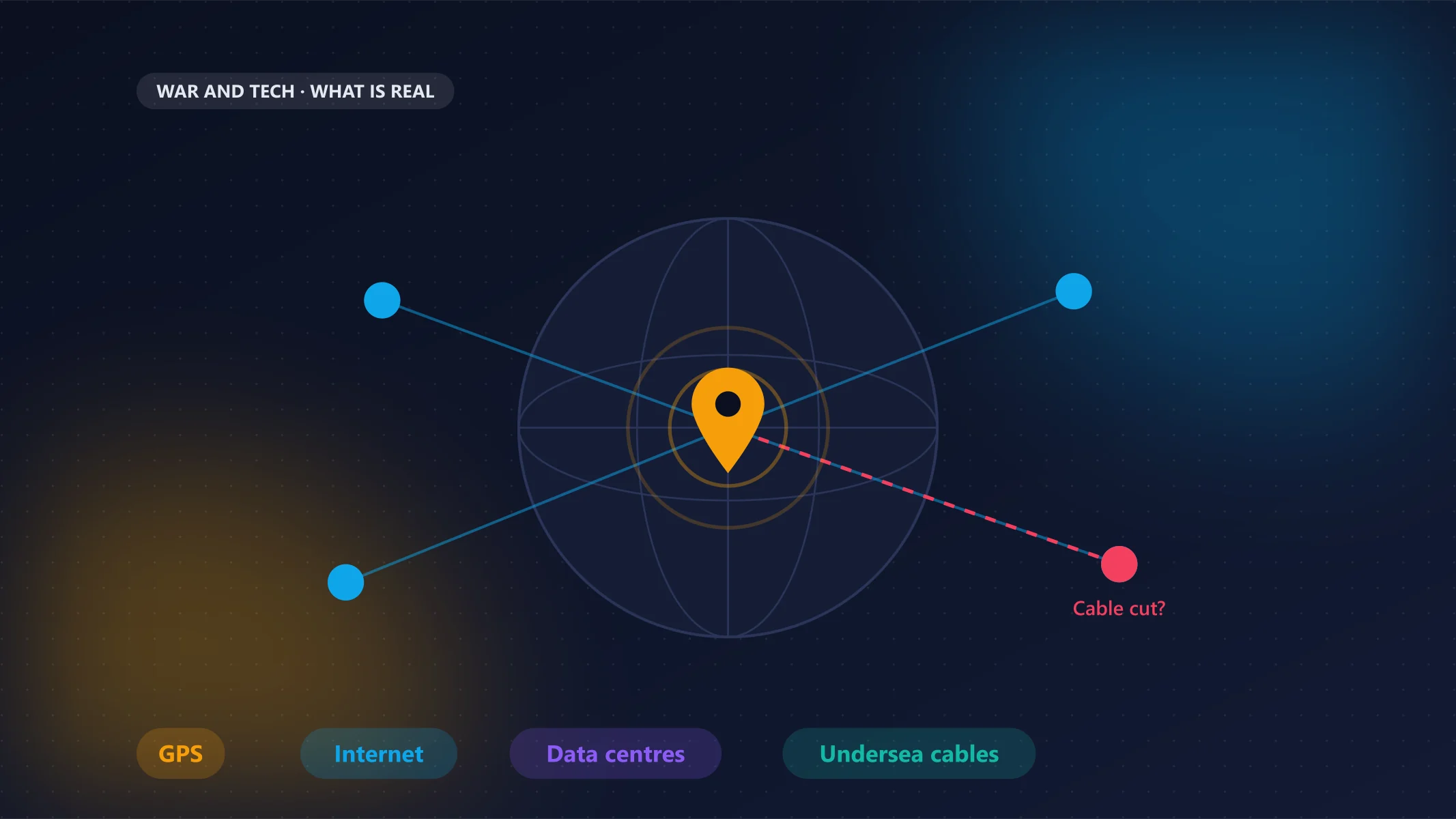
The 2026 Iran war has shown real weak points (GPS jamming, an internet shutdown, drone hits on cloud data centres), but undersea cables had been spared as of late April and the Strait of Hormuz carries under 1% of global bandwidth.
Best Second-Hand iPhones in Sri Lanka (2026 Buying Guide)
For most buyers in Sri Lanka the iPhone 12 (128GB, about Rs 78,000 asking) is the best-value used iPhone; the iPhone 11 is the cheapest model Apple still lists for iOS 27.