Black Friday 2026: Dates and How to Tell a Real Tech Deal From a Fake One
Black Friday 2026 is on 27 November and Cyber Monday on 30 November. How to check a tech deal’s price history for free, spot the common tricks, and avoid the fake shops that appear every November.

On this page
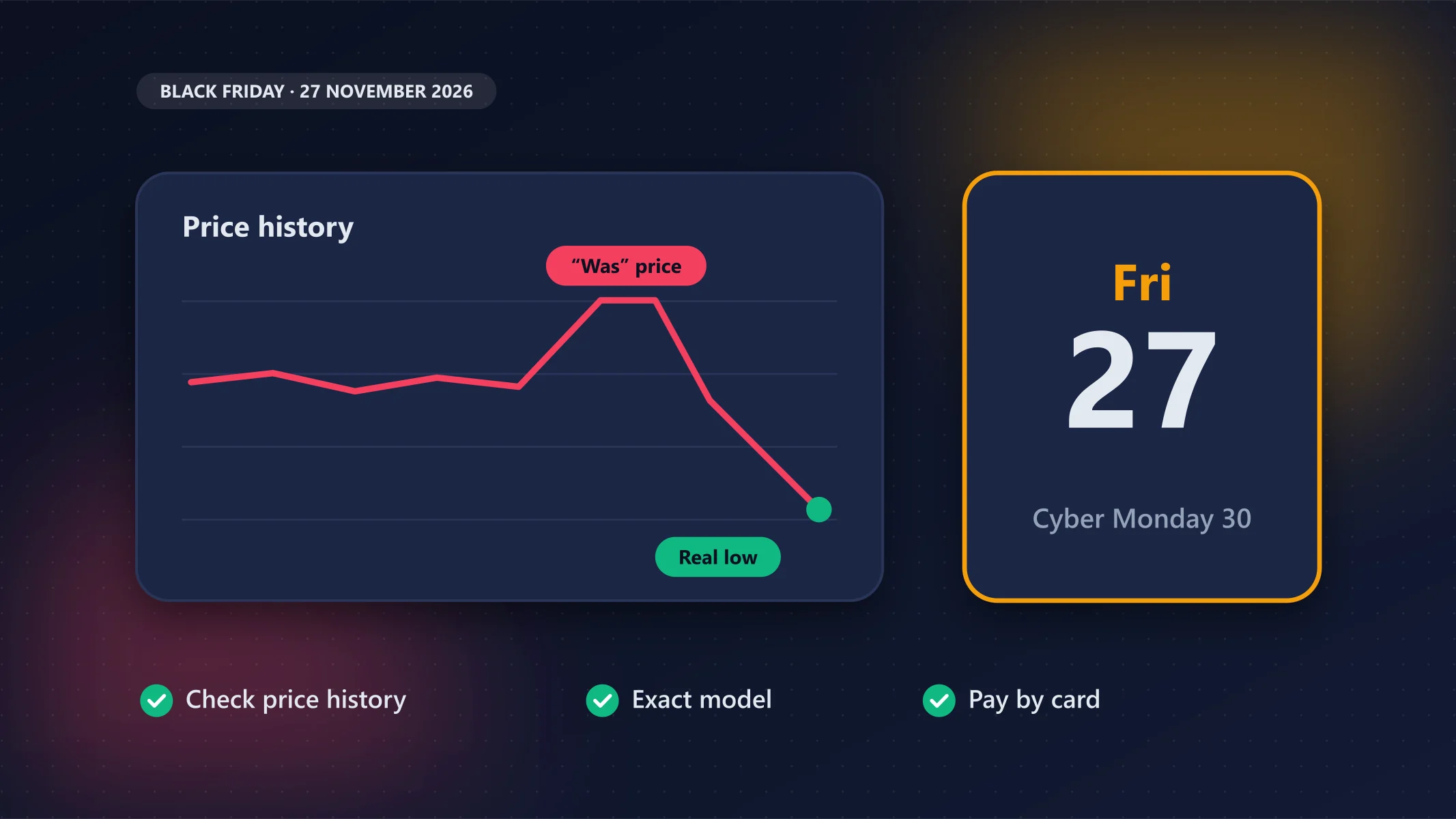
Black Friday 2026 falls on Friday 27 November, with Cyber Monday on 30 November. Many shops start their "Black Friday" offers weeks earlier, so the countdown banners are already up.
Some of those offers are genuinely the lowest prices of the year. Others are normal prices with a big crossed-out number next to them. A few come from shops that don't exist at all. This guide shows how to tell them apart in a few minutes, using free tools and the official advice from the US Federal Trade Commission (FTC) and cybersecurity agency CISA.
The short version
Dates: Black Friday is 27 November 2026, Cyber Monday 30 November. Before you buy: check the price history (Google Shopping, or CamelCamelCamel and Keepa for Amazon), make sure it's the exact model you want, and compare the total price with shipping. To stay safe: don't buy from unknown shops you found through social media ads, pay by credit card, and never pay with gift cards, wire transfers or crypto.
Black Friday 2026 dates
| Day | Date (2026) |
|---|---|
| Thanksgiving (US) | Thursday 26 November |
| Black Friday | Friday 27 November |
| Small Business Saturday | Saturday 28 November |
| Cyber Monday | Monday 30 November |
Black Friday is always the day after the fourth Thursday of November, US Thanksgiving. The date is the same in the UK, Europe, Australia and Asia, where shops have copied the event. In practice, sales are not limited to one day: many retailers run them for the whole week, and some start in early November.
Step 1: Check the price history, not the "was" price
The single most useful thing you can do is look at what the product actually cost over the last few months. A big "was" price on the shop's page tells you very little. The price history tells you whether today's price is really low.
Free ways to check:
- Google Shopping price insights (US). Search for the product on Google Shopping and open it. The price insights section says whether the price is low, typical or high and shows how it changed in recent months. Google says its typical price is based on sellers across the web, not only those listed on Google. It also flags products whose price has just dropped to its 30-day low.
- Google price tracking. Tap Track price on a product card to get an email and a notification when it drops below a price you choose. Google offers this in the US, Canada, Australia, Japan and India.
- Chrome's Shopping insights (US). Chrome can show a product's price history and price range across the web when you're signed in and have sync turned on.
- CamelCamelCamel and Keepa (Amazon). Both track Amazon price history and send price-drop alerts. CamelCamelCamel covers Amazon US.
If the "deal" price is the same as the price a few weeks ago, it isn't a Black Friday deal, it is just the price. Google itself warns that its insights don't predict future prices, so no tool can tell you whether it will be cheaper next week.
Step 2: Make sure it's the exact product you want
Deals are often on a slightly different product from the one you have in mind. Before you buy, check:
- The model number and generation. Last year's laptop or phone often looks identical to this year's. Compare the full model number, not the name.
- The specs. Storage, RAM, screen and processor can differ between versions sold under the same name.
- New or refurbished. "Renewed" and "refurbished" items can be good value, but they should be priced well below new ones.
- Region and warranty. A product bought from a foreign store may not come with a local warranty.
Step 3: Compare the total price
A low headline price can turn into an ordinary one at checkout. Add up shipping, any import duties and taxes, the accessories you'll need (chargers are often sold separately), and the price after any free trial ends. Google's 30-day-low check already uses the total price, including shipping.
For software and subscriptions, look at the renewal price, not just the first year. A big discount on year one doesn't help much if the plan renews at the full price. Check the refund window too.
Step 4: Avoid fake shops and scams
November is busy for scammers too. Here is what the FTC and CISA advise:
- Be wary of social media ads with unusually low prices. The FTC says scammers impersonate real companies and run ads for brand-name products at very low prices. The link may lead to a site that sends a fake, something different or nothing at all.
- Research the seller. Search the shop's name and web address with words like "review", "complaint" or "scam" before you buy, the FTC advises.
- Pay by credit card. It lets you dispute the charge if you're billed twice, never receive the item or get the wrong one. If a seller insists on a gift card, wire transfer, payment app or cryptocurrency, the FTC says "it's probably a scam".
- Keep records. Save receipts and order confirmation numbers in case you need a refund.
- Shop through trusted sources. CISA suggests going to known retailers yourself instead of clicking links in emails or ads, and checking that a site is legitimate before you enter any personal or payment details.
- Get your devices ready. CISA also advises updating your phone and computer, using strong, different passwords, and turning on multi-factor authentication for your shopping and email accounts.
In the US, you can report scams at ReportFraud.ftc.gov.
Buying from outside the US
Most Black Friday coverage is about US stores, and many of those deals don't ship abroad. If you're in Sri Lanka, India or elsewhere, compare the deal with local prices after shipping and import duty, and check whether you'll get a warranty you can actually use. Sometimes a local seller or a good second-hand option beats a US discount. For phones, see our guide to buying a used iPhone in Sri Lanka.
FAQ
When is Black Friday 2026?
Friday 27 November 2026, the day after US Thanksgiving (Thursday 26 November). Many shops start their sales earlier in the month.
When is Cyber Monday 2026?
Monday 30 November 2026.
Are Black Friday deals real?
Some are, some aren't. The only reliable test is the price history: if the price is clearly below what the product has cost over the last few months, it's a real deal. A crossed-out "was" price on its own proves nothing.
How can I see a product's price history for free?
Use Google Shopping's price insights (in the US) or Chrome's Shopping insights. For Amazon, use CamelCamelCamel or Keepa, which both show price history and send drop alerts.
Is it safe to buy from a shop I found through a social media ad?
Be careful. The FTC warns that scammers run social media ads that impersonate real brands. Search the shop's name with "scam" or "review", buy from retailers you know, and pay by credit card.
Is Black Friday or Cyber Monday better for tech deals?
There's no reliable rule, and many deals run across both days. Set a price alert for the product you want and buy when it reaches your price.
What I could not check
- This guide doesn't list any deals yet. Most retailers haven't published their full Black Friday prices, and I won't list "deals" I can't check against price history.
- Google's price insights and Chrome's Shopping insights are US-only, and price tracking covers only the countries Google lists. I didn't check what works in other countries.
- Retailers set their own sale dates, so check each store's own page.
Sources
- How to avoid an online shopping scam this holiday season (US Federal Trade Commission, 25 November 2025)
- #SecureTheSeason: Holiday online shopping safety (CISA)
- Get price insights and About price tracking on Google (Google Help)
- Shopping Insights and price tracking in Chrome (Google Chrome Help)
- CamelCamelCamel and Keepa (Amazon price trackers)
- What is BFCM and when is Black Friday Cyber Monday 2026? (Klaviyo, 2026 dates)
Related reading
How this was researched
This article is based on official documentation, pricing pages and the other sources listed in the article. It does not include my own hands-on testing. I update articles when pricing or features change. Read my review process.

About the author
Sameera Jayakodi
Software engineer and founder of TechToolHub
I'm Sameera Jayakodi, a software engineer based in Sri Lanka. I use AI, developer and productivity tools in my own work every day, and I started TechToolHub to give clear, honest comparisons without the hype. Every article is researched from official sources, and the ones marked "Hands-on tested" include my own testing.
Related articles
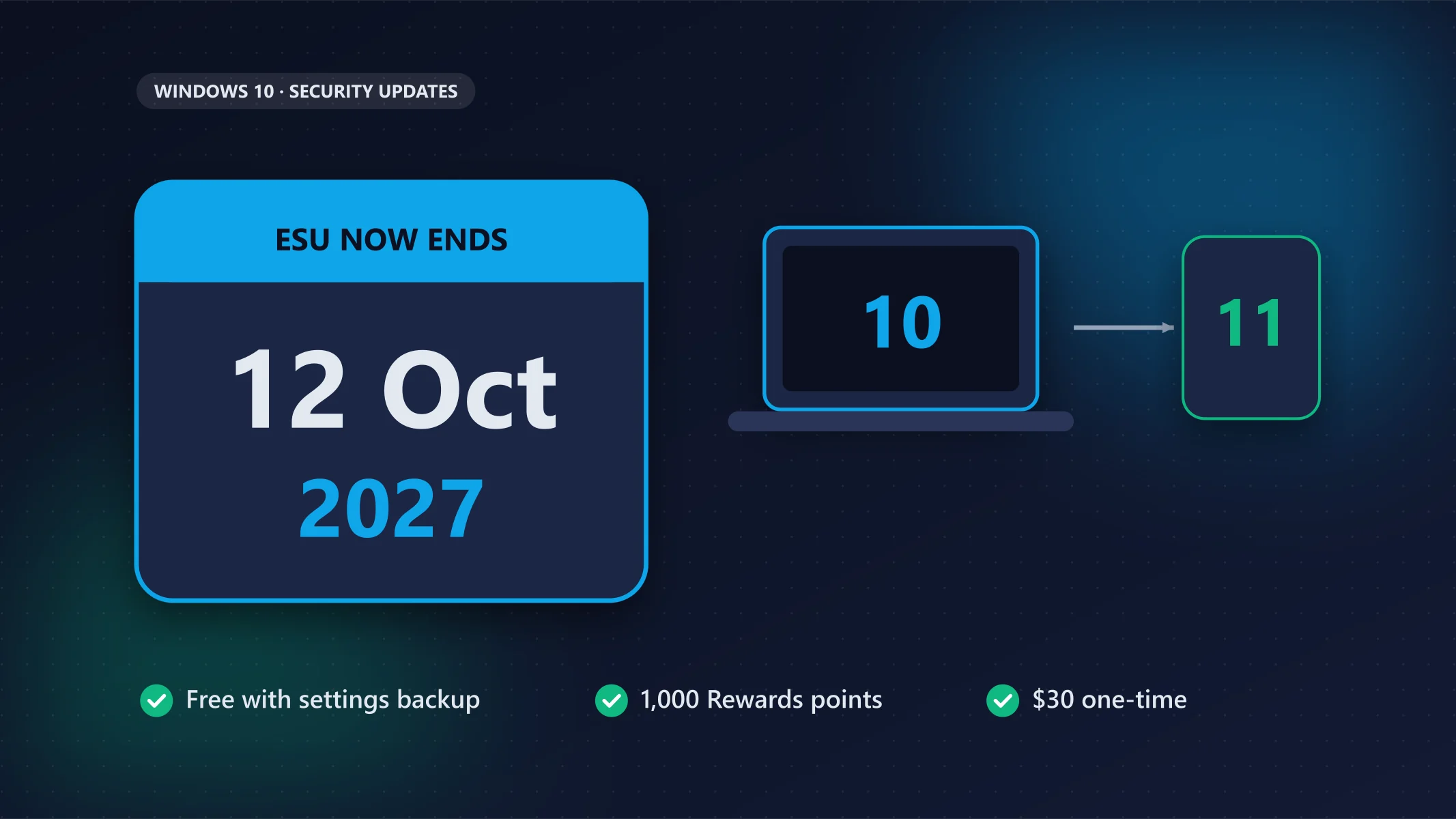
Is Windows 10 Still Supported? Free Security Updates Now Run to October 2027
If your PC still runs Windows 10, enrol in ESU now (it can be free): it keeps security updates coming until 12 October 2027, giving you another year to move to Windows 11 or something else.
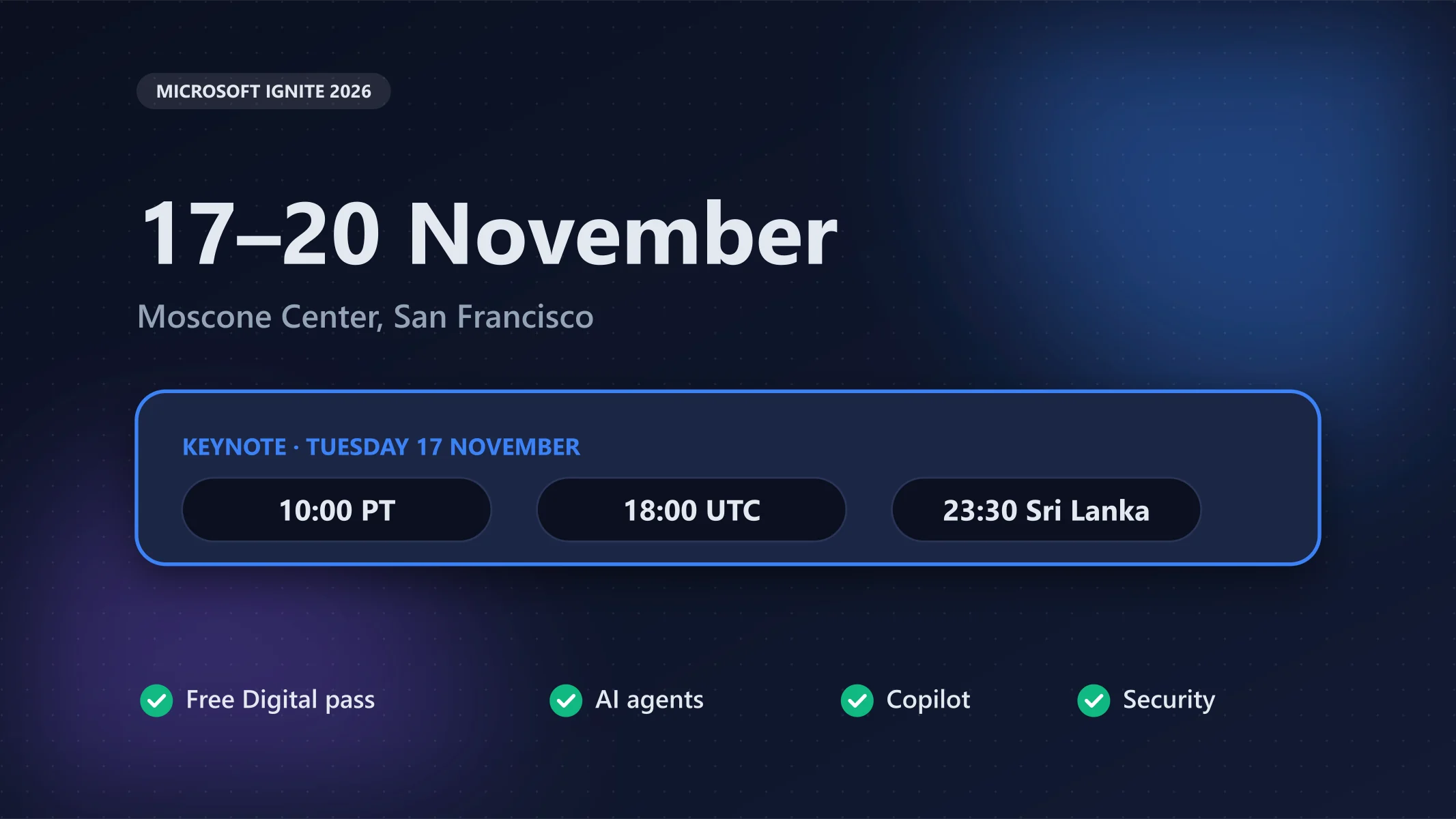
Microsoft Ignite 2026: Keynote Time, Free Online Pass and What to Expect
Register for the free Digital pass to watch the 17 November keynote live; expect most of the news to be about AI agents, Copilot and security.
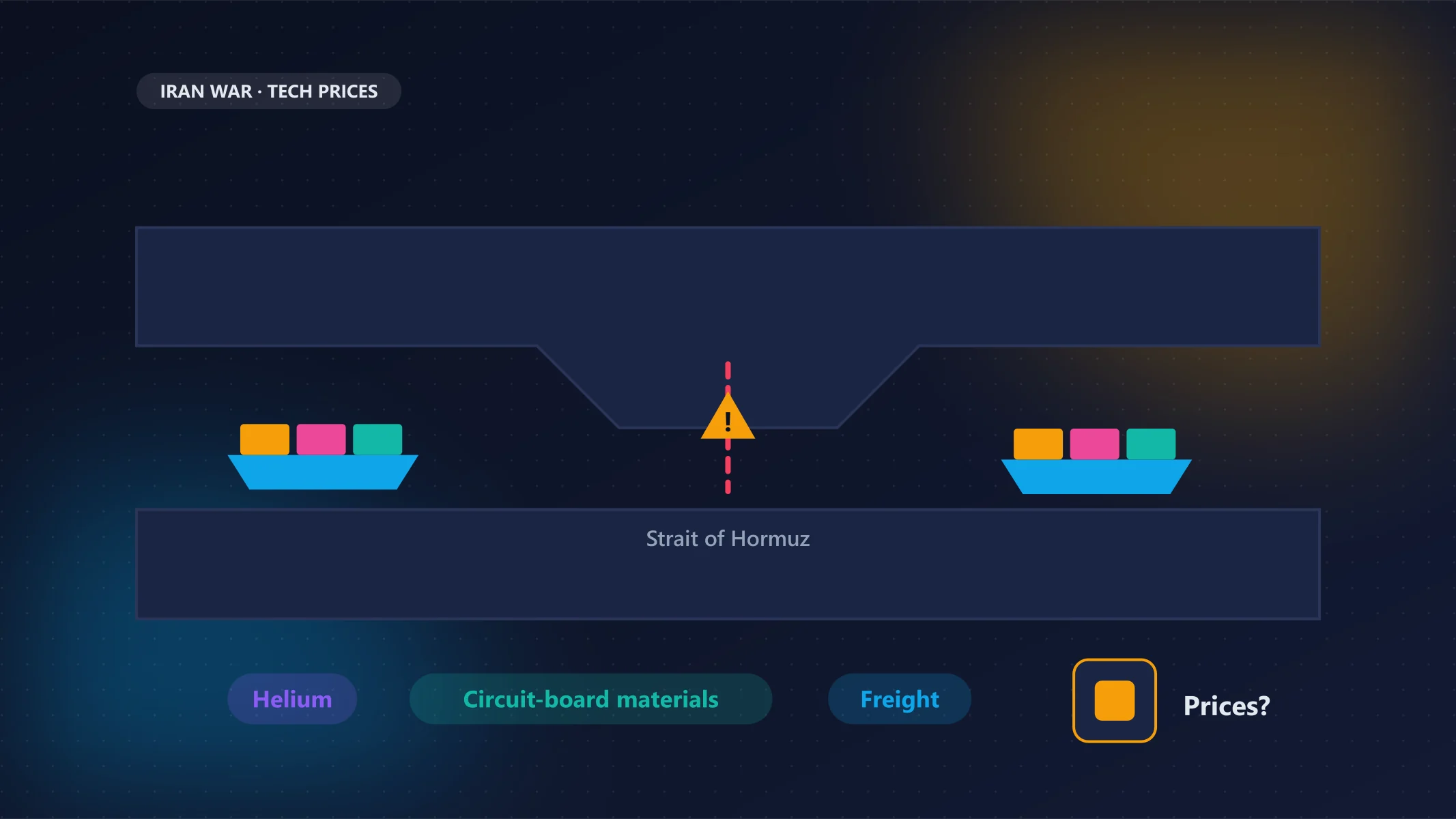
Will the Iran War Raise Tech Prices? What We Know (Nov 2026)
The war adds real costs (helium, circuit-board materials, freight, energy), but the sharp device price rises of 2026 are mainly about memory, and I found no source that puts a number on the war share.